

Through the Valley?
To what end?

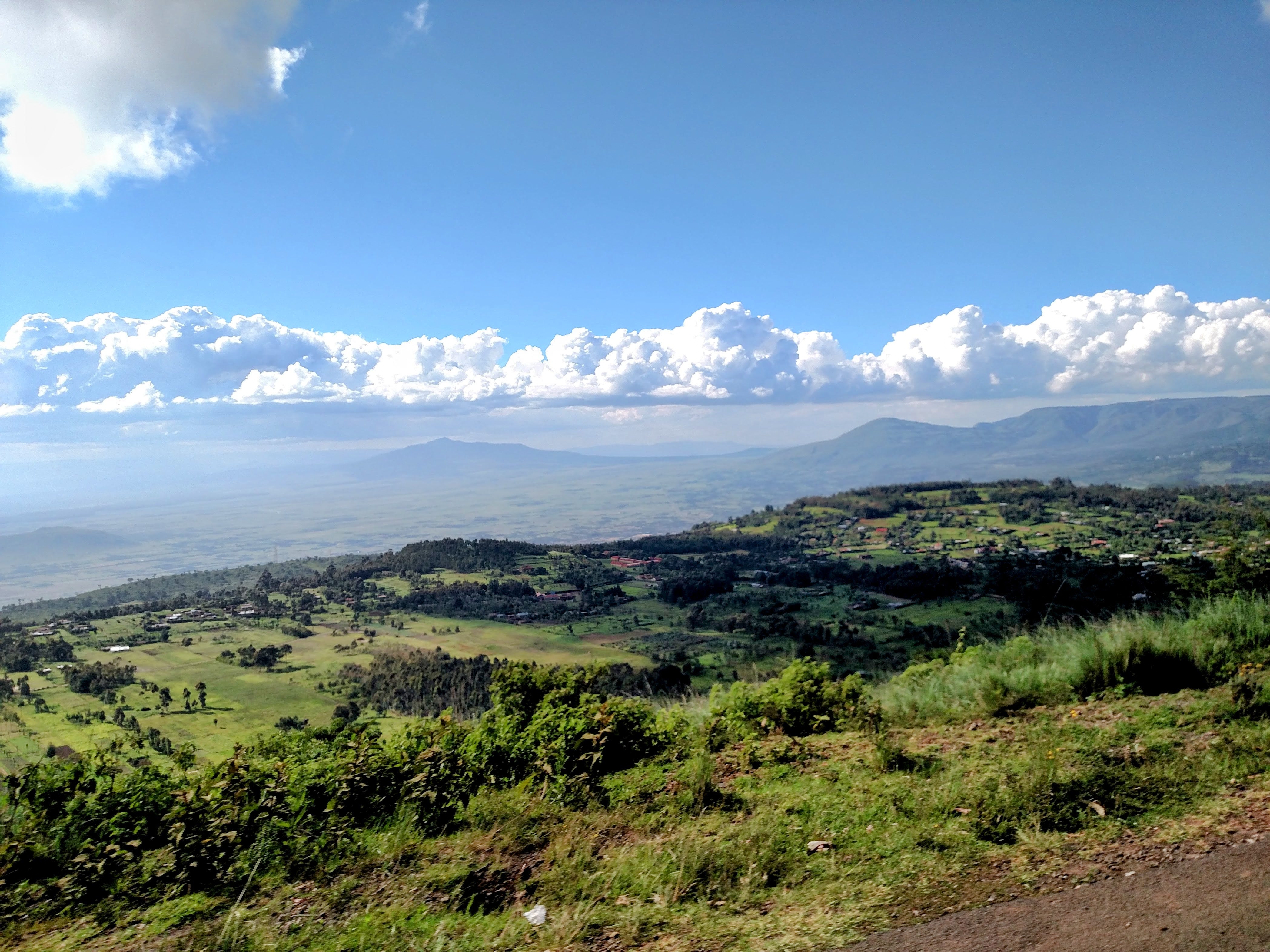
Even when I walk through the valley…
I’ve been thinking a lot lately about the moments of life that are awesome and those that are burdensome. There is a distinct and notable difference between when I feel like I’m on a mountain top, close to the Lord, revelling in the exaltation of blessing and peace and when I’m in a rut of frustration, a gully of discomfort, a valley of hardship, pain, suffering and misery.
Have you any idea what I’m talking about? Have you known those times of the divine glory and of the dark void? We love mountain-top moments, don’t we? We long for them to last. We may even try to preserve them, like Peter on the Mount of Transfiguration when he offered to build three shelters for Jesus, Moses and Elijah (see Mt 17:4, Mk 9:5, Lk 9:33). The dark times, however, we try either to avoid or to get through as quickly as possible.
I don’t like being in a crucible any more than the next person, but I’ve come to realize that in life the crucible is inevitable. No one get’s through life in this world unscathed. We will all face the valley of trial, hardship and suffering. A reasonable question may be, “why?” But maybe a better question may be, “to what end?”
Wouldn’t it be wonderful if all our valleys were like the Valley of Elah where David defeated Goliath (see 1 Sam 17:1-3)? Or maybe like the Valley of Kishon where Deborah defeated Sisera (Judges 4-5) and Elijah executed the 400 prophets of Baal (1 Kings 18)? Or maybe like the Valley of Ajalon where God caused the sun and moon to stand still until He had given victory to Israel over the Amorites (Joshua 10:12-13)?
Sadly, my dark seasons are more like slogging through the valley of the shadow of death, wishing that the promised closeness of my Good Shepherd felt a little more… well, close. My valleys tend to feel more like the valley of dry bones through which the prophet Ezekiel was led by the Angel of the Lord. Ezekiel may have felt disturbed, anxious, distraught over the hopelessness of the vision (see Ezekiel 37). Can these dry bones live again? It is a vision that connects my thoughts with the Kidron Valley.
King Josiah purged the Temple in Jerusalem of the idolatrous elements of Baal and Asherah. He had them dumped in a valley that has, for centuries, been closely associated with death and burial. Read this short description.
4 Then the king instructed Hilkiah the high priest and the priests of the second rank and the Temple gatekeepers to remove from the Lord’s Temple all the articles that were used to worship Baal, Asherah, and all the powers of the heavens. The king had all these things burned outside Jerusalem on the terraces of the Kidron Valley, and he carried the ashes away to Bethel. 5 He did away with the idolatrous priests, who had been appointed by the previous kings of Judah, for they had offered sacrifices at the pagan shrines throughout Judah and even in the vicinity of Jerusalem. They had also offered sacrifices to Baal, and to the sun, the moon, the constellations, and to all the powers of the heavens. 6 The king removed the Asherah pole from the Lord’s Temple and took it outside Jerusalem to the Kidron Valley, where he burned it. Then he ground the ashes of the pole to dust and threw the dust over the graves of the people.
2 Kings 23:4-6 NLT
This valley of Kidron lies between the Mount of Olives and the Temple Mount in Jerusalem. It is the valley through which Jesus walked with His disciples after their last supper together in the upper room. After supper, “they sang a hymn and went out to the Mount of Olives” (Mt 26:30 NLT). Jesus needed some time in prayer, so He went to the Garden of Gethsemane at the foot of the Mount of Olives in the Kidron Valley. There, His wrestling in prayer was so intense that “His sweat fell to the ground like great drops of blood” (Lk 22:44b NLT). This was an horrific valley for our Lord.
The weight of the world’s “valleys” was resting squarely upon His shoulders. He had options. At any moment he could have told His Father that He had had enough and wanted to be rescued from this valley. He did not. He submitted and surrendered to the Father’s will, praying, “My Father! If it is possible, let this cup of suffering be taken away from me. Yet I want your will to be done, not mine” (Mt 26:39b NLT).
Here is the answer to our question from earlier. Not the “why” question, but the “to what end” question. When we walk through the valley of the shadow of death, Jesus our Good Shepherd remains close beside us to comfort and encourage us to respond as He responded when He was walking through the valley of the shadow of His own death. He chose to submit His will to the will of His Father and our Father. Our good, good Father, then, works out His perfect will for us perfectly. We still suffer. We still hurt. We still wrestle with God to the point of exhaustion. But never cut off. Never alone. Never without a future and a hope.
The Lord is my Shepherd. I have everything I need in Him. Especially when living in a valley season. He is right there with me. He comforts and guides me because He’s been there. He knows the anguish. He protects me, even from myself. He sets a table for me in the presence of those who would do me in. He takes me from the Kidron Valley to the Valley of Elah where giants fall, to the Valley of dry bones where the prophetic message is spoken to the winds and the breath of life comes into me once more. In my valley, my Good Shepherd and I make an overwhelming majority because He has already won the victory for me.
How deep and dark does your valley seem to you? How close are you to despair?
Don’t despair. Jesus has already made a way through the valley for you. He has done for you what you could never do for yourself. He is enough. You have all that you need. Ask Him to lead you to green pastures and beside still waters that will restore your soul and renew your strength. Then keep walking beside Him. He knows the way out of the valley.
Peace